HOME
  • Timeline in history
    • Timeline - Eritrea
    • TIMELINE - MANITOBA
  • Author Resources
    • Articles
    • Author Reflections
  • عربي
    • خواطر المؤلف
    • مقالات
    • محطات تاريخية إريترية
Articles

Pitfalls of the Friday Sermon

8/28/2021

0 Comments

 
Picture
​By: Ismael Mukhtar
The Friday congregation is one of the most important assemblies for Muslims. As stated by Al-Imam Ibn Al-Qaym, it is the next most important gathering after the annual Arafa day gathering in Hajj. Jurists have devoted a significant amount of their juristic deliberations on examining the different rules, etiquettes and pronouncements pertaining to Friday congregation. Al-Imam Ashawkani, for example, devoted about sixty pages of his book Nael Alawtar on the topic of Friday congregation. Similarly, Al-Imam Ibn Al-Qayim devoted more than one chapter of his book Zad Al-Maad to Friday congregation, providing details on the prophet’s (peace be upon him) style of sermon, its content, length, and manners of delivery.

The purpose of the Friday congregation is to bring the larger community together to impart spiritual, social, and educational benefits. Attending Friday congregation is considered to be an obligation (Wajib). Further, jurists stipulate that Friday congregation should be held at as few locations as possible, preferably at one location only. More than one location is acceptable only when there is an absolute need for it. Accordingly, some jurists differentiate between Jamee’ and masjid. Jamee’ refers to a larger mosque where Friday congregation is held (in addition to the daily 5 prayers), masjid refers to the neighborhood mosque where only daily 5 prayers are held but where no Friday congregation is held. The expectation is that on Fridays people will have to make extra effort to congregate at a central Mosque and share the greater blessing of a larger gathering.
 
Friday congregation is unique and significant partly because it occurs in greater frequency (every week), it is attended by large numbers of Muslims from all walks of life and most importantly it is obligatory. The core of the Friday congregation is the sermon (khutbah); which, according to many jurists, is an obligation (wajib) upon which the validity of the Friday congregation depends. Al-Imam Ibn Al-Qaym’s book gives us an insight to the prophet’s sermon. We learn from the description, that the prophet’s regular khutbah were brief, clear, concise and to the point. Furthermore, his khutbah’s were an avenue to address various issues such as articles of faith and the hereafter. The prophet himself was also emotionally involved in the khutbah as reflected in his tone and his facial expressions during the khutbah. ​The Friday khutbah has enormous potential to be the source of learning, rejuvenation, and refreshment for all members of a community. It is an important tool in creating greater awareness, harmony and advancing social reform within a community. The importance of the khutbah becomes even more evident within North American context when we realize that for many North American Muslims, the khutbah is one of the few conduits to learning about Islam. However, despite this great potential of a khutbah, its effectiveness depends on certain variables. For instance, in countries where there is serious curb on freedom of speech, Khatibs (deliverers of sermon) are put under close scrutiny. In some countries they have to pre-submit a written copy of their Khutbah’s to be approved and stamped by authorities. Within this kind of environment many talented khatibs are banned and the quality of the Khutbah suffers greatly.
 
In North America, however, these impediments don’t exist. If there are any, they are the result of the prevailing attitudes within the congregation or the limitations of the Khatib himself. The key factor in an effective Khutbah is the khatib. The personal integrity, level of acceptability by the congregation, public speaking abilities and depth and breadth of knowledge are the main elements that make up a good khatib.
 
In the following paragraphs I will attempt to identify and discuss some of the most common pitfalls that undermine and compromise the quality of khutbah. The list is not an exhaustive list, but a sample of what is most prevalent.
 
1. Ritualized khutbah:
The primary purpose of a Khutbah is to educate, remind, admonish, and rejuvenate the congregation. This can only be effectively accomplished if people fully understood the Khutbah. The preferred language of Khutbah among jurists is Arabic. If the congregation understands Arabic, there is no better language to communicate the message of the Quran more eloquently than the Arabic language. However, where the majority of the congregation doesn’t speak Arabic, delivering the khutbah in Arabic practically deprives people from understanding the khutbah and reduces it to a mere ritual. Although some classical jurists prohibit delivering the Khutbah in languages other than the Arabic, many other classical and contemporary jurists see no objection in doing so. Strict adherence by some mosques to the prohibiting position has created some visible anomalies that compromise the effectiveness and value of the khutbah to a great extent. In some mosques, the khatib reads from a standard written Arabic text, with no one understanding the message, including some times the Khatib himself. Some mosques overcome this by having a talk before Khutbah in English and then an Arabic standard short khutbah. Even though this is a better alternative, it still creates a situation where time is not used effectively to communicate a meaningful message and congregates not attending the English pre-Khutbah talk as they do not consider it the “real Khutbah”. Sheikh Bin Baya, a contemporary authority, who indicates the permissibility of delivering the khutbah in languages other than Arabic, suggests as a means of satisfying the two fiqh positions, to deliver the khutbah in English and quote within the khutbah Quranic verses and hadith in Arabic. This alternative definitely is much preferable and is consistent with the spirit and substance of the khutbah.
 
2. Politicized khutbah:
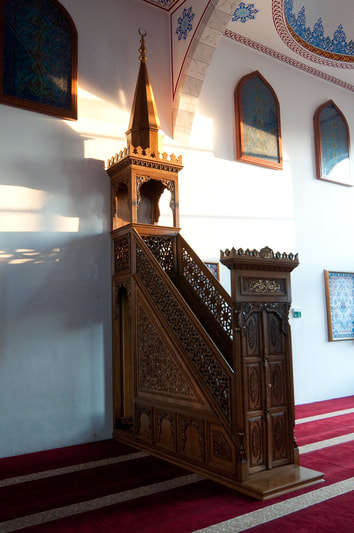
Attendants of Friday congregation expect their Khatib to convey a message that is consistent with the Quran and Sunna and free from polarizing and partisan messages. Accordingly, the pulpit should be kept free from politically driven and divisive Khutbahs. Controversies, either political or personal should be addressed in other forums. Occasionally, conflicts between the Imam and the Mosque administration or certain segments of the congregation become (subtly or explicitly) the subject of the Khutbah. These kinds of khutbahs can cause some people to abandon Friday congregation or avoid certain mosques. Khatibs need to realize that standing on the pulpit is an advantage not available for everyone but carries an immense responsibility. Accordingly, it is essential that mosque administration and khatibs take every precaution to ensure that the khutbah maintains its purely educational and spiritual nature. This does not necessarily mean that community issues should be avoided in the khutbah; on the contrary they should, but in an objective, sensible, nonbiased, non-finger pointing and constructive way.
 
3. Shallow and repetitive khutbah:
Many times, the content of the Khutbah become repetitive, some times shallow and long. Complaints of boredom from the content of khutbah is fairly common among many congregations. The extent of this problem depends on the level of breadth and depth of knowledge the khatib has plus the amount of time he spends in preparing for the Khutbah. Repeating a message is not a problem by itself. Many khatibs repeatedly talk about Taqwa, but the way the message is repeated would be the source of boredom. A message can possibly be repeated without causing boredom within a different context and with different scenarios. The issue of not having enough time to prepare for khutbah should not be an excuse for a full time paid khatib. However, in the case of volunteer khatibs it could be excusable if it happens occasionally, but not persistently. Overall, regardless of the status of the khatib, congregates deserve a quality khutbah and no effort should be spared in ensuring that.
 
4. Monotonous khutbah:
A khutbah might not be shallow or repetitive, but it might lack variety. A khatib might have depth in certain area of knowledgeable but lacks breadth of knowledge. This may lead to a situation where the khutbahs will have a persistent focus on the same set of topics. Friday Khutbahs topics need to have a variety including personal, family, community, and global issues. Further, in the constantly changing world, congregates expect khutbahs that give them some direction and perspective on the pressing current events and issues. Accordingly, Khatibs need to have both depth and breadth of knowledge and need to stay abreast with current affairs, locally and globally.
 
5. Emotionless khutbah:
A khutbah is primarily a reminder that pierces deep into the heart and minds, invokes emotions, brings tears and refreshes the soul. Accordingly, Friday khutbah should have a soft touch and should come deep from the heart of the khatib. Reminders of death, the hear after, insight into human life, introspection into the human personality, love of Allah, taqwa, humility, humbleness, care for others, compassion etc. should be among the core topics of a khutbah. The khatib himself needs to be emotionally involved in delivering the khutbah. This, however, doesn’t mean an evangelical style of khutbah, full of hype, loud in voice and void of substantive content.
 
6. Confusing khutbah:
A khutbah could be full of useful important information but confusing. A khutbah that lacks a theme, a sequential natural flow of ideas, introduction and conclusion leaves the audience with disconnected and fragmented pieces of information. An effective khatib needs to clearly organize his thoughts, itemize his message, understand his audience, and formulate in his mind the core points he want to communicate to the congregation.
 
7. Credibility lacking khutbah:
A khutbah might have all necessary ingredients in terms of content, style and presentation but fails to be effective due to lack of credibility. Credibility comes primarily from the personality of the khatib, his character, knowledge, and general acceptance by the congregation. Further, Khutbah’s credibility is enhanced if the message communicated is supported by quotations from the Quran, Sunnah, recognized Islamic authorities and historical precedence.
 
Suggestion on improving khutbahs:
a) Training of Khatibs: Assuming Khatibs already have adequate broad based knowledge of Islam, they must be trained on public speaking, fiqh rules pertaining to Friday congregation and proper recitation of the Quran. Further, khatibs need to be made aware of the gravity of the responsibility they are undertaking and the pivotal role the pulpit plays in shaping and bringing the community together. The training should be ongoing and include both full time and part time khatibs. As part of the training, khatibs should be given constructive and timely feed back in addition to resources for research and updates on current issues.
 
b) Establishing an evaluating committee: It is essential to properly plan, prepare, evaluate, and assess the khutbahs to have an independent body to assign Khutbahs, monitor the quality, evaluate content, and tone and provide timely feed back to khatibs. The committee should remain neutral and nonpartisan. The primary consideration for the committee is to do what is in the best interest of the congregation. Regular surveys of the congregation on their expectations and sentiments would be essential and very helpful.
 
c) Separation of the de-facto association between role of Imam and Khatib. It is common across communities to assign both roles to one individual (Imam). This practice could be positive or negative depending on the circumstances. A de-facto association between the two positions could some times be problematic if the Imam has limited public speaking abilities. Accordingly, this issue should be assessed case by case. In cases where the Imam has public speaking ability both tasks can be assigned to him permanently or periodically. If not, it should be separated for the interest of the congregation. The practice of separating the role of Imam Al-Ratib and Khatib is fairly common across the Muslim world, particularly in places where there are many scholars who are employed in other capacities and can not serve as regular Imams. This arrangement allows the congregation to benefit from a larger pool of learned khatibs while maintaining a regular Imam for the daily congregations.
 
The aforementioned discussion highlights the pivotal role of khutbahs; accordingly, Muslim communities across Canada need to allocate adequate resources to maximize the benefits accrued from khutbahs. If the money and planning spent on some of the many annual conference held across the country was to be invested in the Khutbah, the benefits could be far greater and more lasting. A Khutbah is the magnet that attracts people to the masjid or repellent that drives them away. It is my humble perception that with some exceptions, Friday khutbahs as well as Eid khutbahs are seriously underutilized as a vehicle of dawa and learning across our communities. Improving the quality of the khutbah will not only attract people to the masjid, but it will also help transform them to be better Muslims and better citizens. It is encouraging to see an increase of Friday prayer locations across the country; a corresponding increase in the quality of the khutbah is desperately needed and all efforts should be directed to that end. 
(Reproduced from the Muslim Free Press)           
0 Comments


Leave a Reply.

Photos from Ibrahim Seyam, Umair Ulhaque, arne.list, jb10okie, Sam Howzit, karoglan.nurfelak, ThoroughlyReviewed
  • Timeline in history
    • Timeline - Eritrea
    • TIMELINE - MANITOBA
  • Author Resources
    • Articles
    • Author Reflections
  • عربي
    • خواطر المؤلف
    • مقالات
    • محطات تاريخية إريترية